How to Evaluate the Quality of a Free HTML5 Game Provider
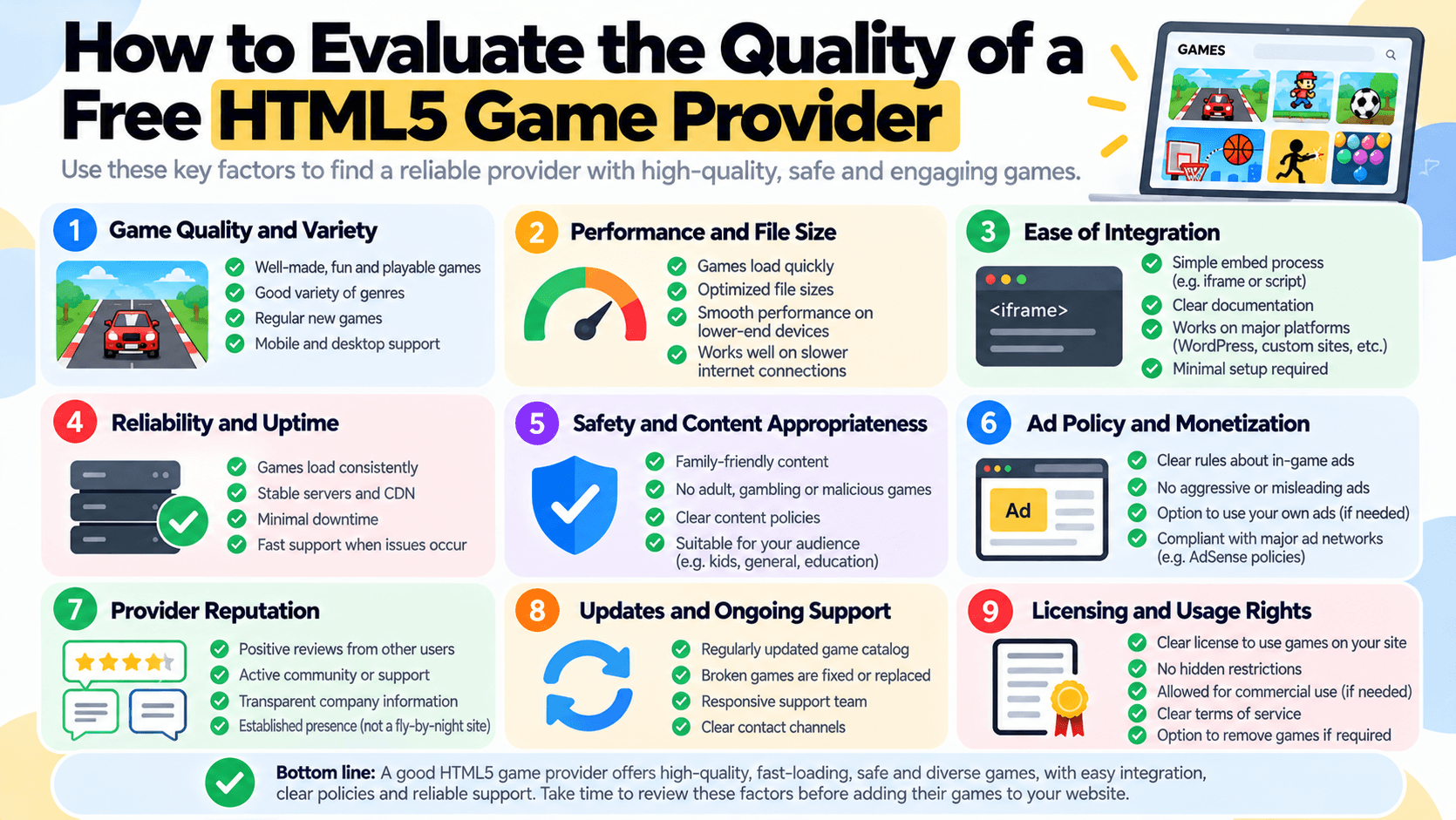
Evaluate a game provider on five things: the games, the legal terms, technical reliability, advertising and how well the catalog is kept up to date. The matrix below gives each a weight and a test you can run in an afternoon, and the worked example shows the tests on a real provider so you can see the numbers they produce.
Scope note. We apply the tests to PlayKovo's public feed because we can read its terms and test its endpoints. We do not score other providers here: the ones we looked at did not give us terms and data we could verify, and a score built from impressions would not be worth printing. Use the same method on them.
The matrix
Score each criterion from 0 to 3 (0 = fails or unknown, 3 = clearly meets). Multiply by the weight. The weights are a starting point. A site for children would weight "ads" higher, a site with limited bandwidth would weight "game weight" higher.
| # | Criterion | Weight | The test |
|---|---|---|---|
| 1 | Written permission to embed | 5 | Terms exist, are dated and say what you may and may not do |
| 2 | Removal and takedown process | 4 | A stated deadline and a contact |
| 3 | Data per game (device, orientation, controls) | 3 | Fields are present for all games, not a sample |
| 4 | Embed health | 4 | Every embed address returns success and may be framed |
| 5 | Start reliability | 3 | A real browser opens the game and presses play |
| 6 | Weight and speed | 3 | Bytes transferred before and after play |
| 7 | Ad transparency | 3 | Terms say what ads appear and who controls them |
| 8 | Catalog freshness | 2 | The feed changes over time and removed games disappear |
| 9 | Support and statistics | 2 | A contact and a way to see usage |
| Maximum | 29 × 3 = 87 |
Worked example: PlayKovo's feed
We ran the tests on 13 and 16 October 2026 using Chrome 155 and the public feed. Scores are our judgment, explained in each row.
| # | Criterion | Evidence | Score (0 to 3) |
|---|---|---|---|
| 1 | Written permission | Partner terms (September 2026) say how to embed, what is forbidden (no hosting files, no passing games off as yours, no hiding credits) and what is allowed | 3 |
| 2 | Removal process | Three business days for a request, faster for legal or security reasons, seven days if the program ends, a contact and a rights notice page | 3 |
| 3 | Data per game | All 90 games in the snapshot had device support, orientation, controls, description, thumbnail, categories and an embed address | 3 |
| 4 | Embed health | All 92 embed addresses in the later feed returned HTTP 200 with no redirect, none sent X-Frame-Options, none restricted framing | 3 |
| 5 | Start reliability | Real-browser press-play tests on eight games passed. Across all 90 games, 80 showed a canvas after pressing play on desktop (we did not investigate the other 10, which may be built from page elements or need a second click) | 2 |
| 6 | Weight and speed | First open: median 1.61 MB, mostly third-party scripts. Game files: median 203 KB, but a spread from about 16 KB to 19.9 MB. A repeat visit: median 36 KB | 2 |
| 7 | Ad transparency | The terms state that ads may appear and cannot be changed. They do not name the ad networks | 2 |
| 8 | Catalog freshness | The feed grew from 90 games (13 Oct) to 92 (16 Oct) in three days | 3 |
| 9 | Support and statistics | A partner contact exists, dashboard statistics need a registered site, and launches are counted only for visitors who accept cookies | 2 |
Weighted total: criterion 1: 5 × 3 = 15; 2: 4 × 3 = 12; 3: 3 × 3 = 9; 4: 4 × 3 = 12; 5: 3 × 2 = 6; 6: 3 × 2 = 6; 7: 3 × 2 = 6; 8: 2 × 3 = 6; 9: 2 × 2 = 4. That adds up to 76 of 87.
Two caveats. The scores were assigned by someone who works in the same group as the provider, and BlogKovo is part of the Kovo family, so check our evidence rather than trusting our numbers. And a score is not a verdict: there is no revenue share, which will matter more to some publishers than any row above.
How to run each test
Tests 1, 2, 7, 9: read the terms. Print or save the version and the date. Look for specific words: days, hours, "may not", "must".
Test 3: check the feed for completeness. Count how many games have each field filled. A short script does it:
const { games } = await (await fetch(FEED_URL)).json();
const has = (k) => games.filter((g) => String(g[k] ?? "").trim()).length;
console.log("games:", games.length);
for (const k of ["description", "controls", "thumbnail", "deviceSupport", "screenOrientation", "embedUrl"]) {
  console.log(k, has(k), "/", games.length);
}
Tests 4 and 5: embed health and start reliability. Our monitoring script does both: it requests every embed address and presses play in a real browser for a sample.
Test 6: weight. Open the network panel in your browser with the cache disabled. Reload an embed and note the transferred size, then press play and note it again. Do this for five games, and again with the cache enabled to see the repeat visit.
Test 8: freshness. Save the feed's game list today and compare it a week later. A feed that never changes may be stale. A feed whose games disappear without a trace is a reliability risk, so check that removed games leave the feed.
What to do with the result
- Below 50% of the maximum: do not build on this provider yet.
- 50 to 75%: usable, with a plan for the weak rows (for example, a monitor if reliability is low).
- Above 75%: a sound base, but keep monitoring.
Always look at the lowest-scoring high-weight row, not the total alone. A provider with a perfect catalog and no written permission fails on the thing that matters most.
Questions the matrix does not answer
- Are the games good? Play them. See our checklist for testing games.
- Does the provider suit your audience? See choosing games for your audience.
- What should you ask the provider in writing? See fourteen questions for a distributor.
A game from the feed we tested
Try it live · PlayKovo catalog
 DesktopsupportedMobilesupported
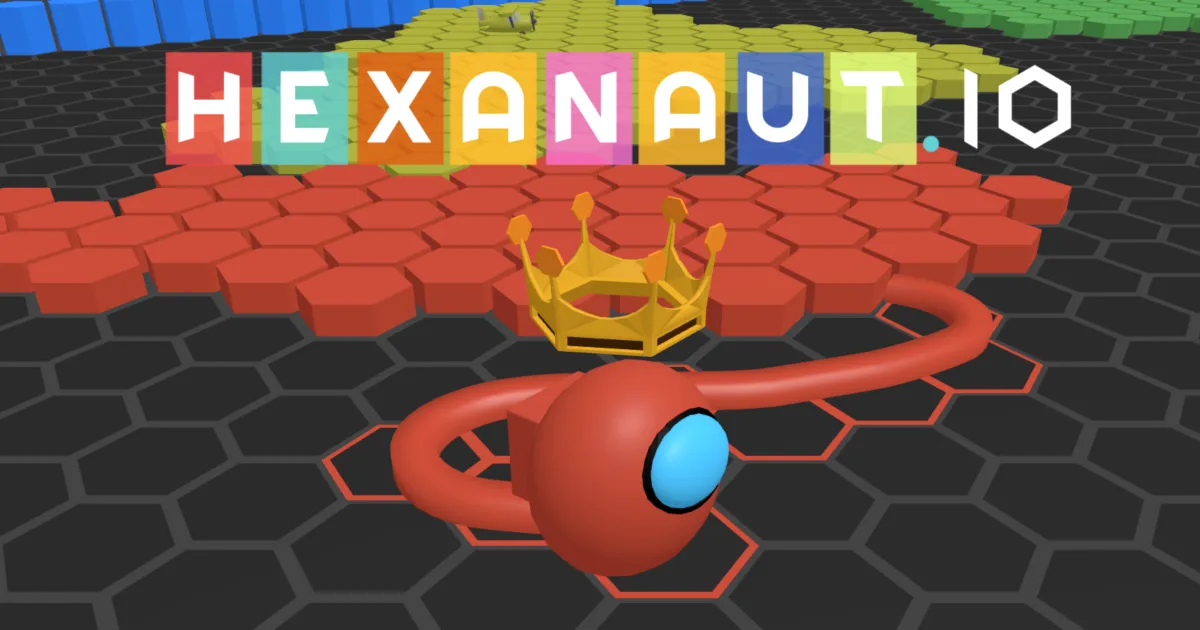
Short description: Loop your tail around hexagonal tiles to capture territory, dodge rivals, and become the King of the map in this free 3D multiplayer .io game.
Related Posts

How We Built Jolopi, a Game Portal That Runs on the PlayKovo Catalog
A developer diary on Jolopi, a visual-first HTML5 game hub fed entirely by PlayKovo's catalog JSON: the cached sync, the plain Node server, and the multilingual SEO setup, as a template for website owners.
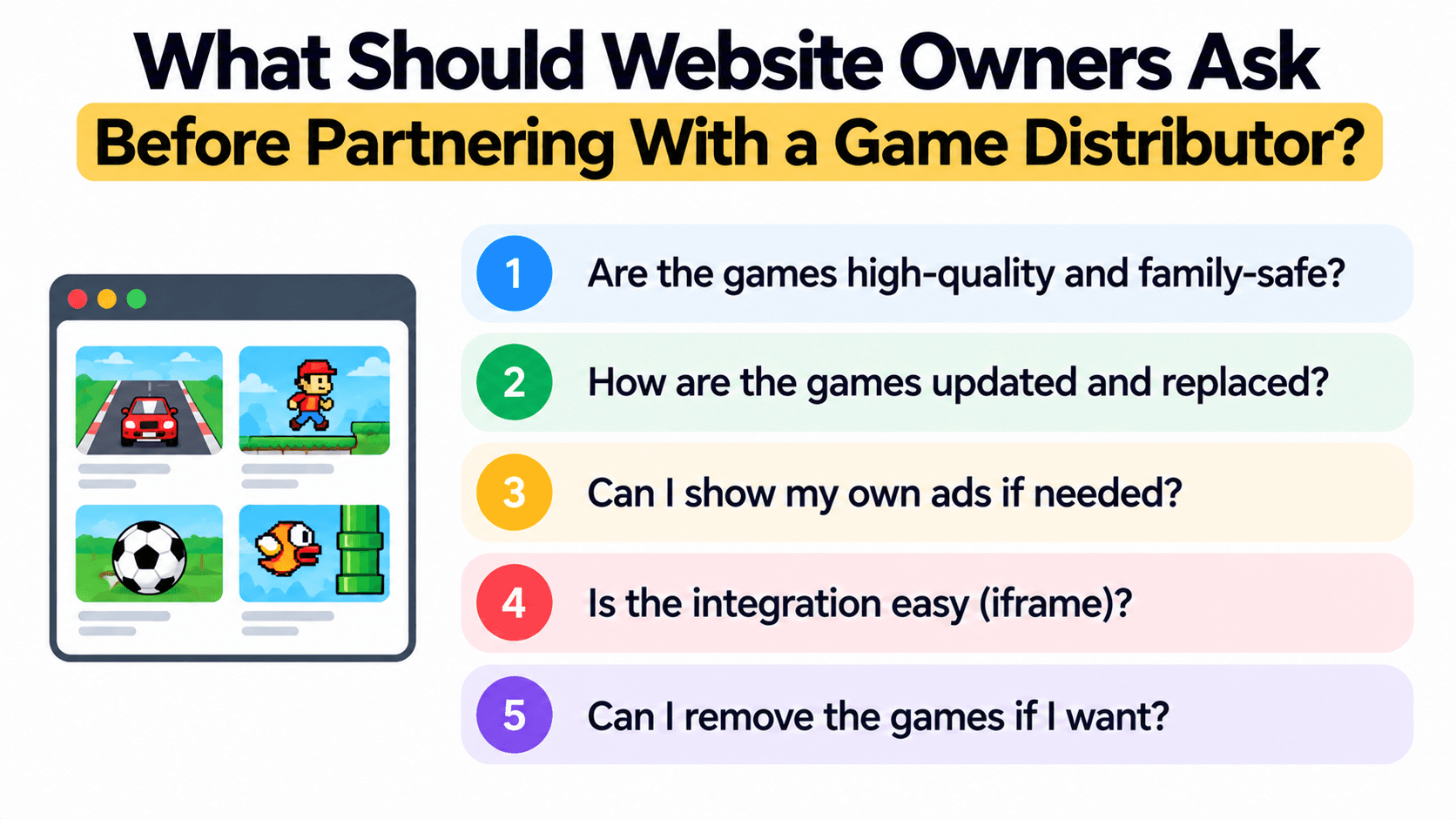
What Should Website Owners Ask Before Partnering With a Game Distributor?
Fourteen questions to put to any game distributor, grouped by what they protect, with the answer PlayKovo's published partner terms give for each one, so you can see what a clear answer looks like and compare any provider against it.
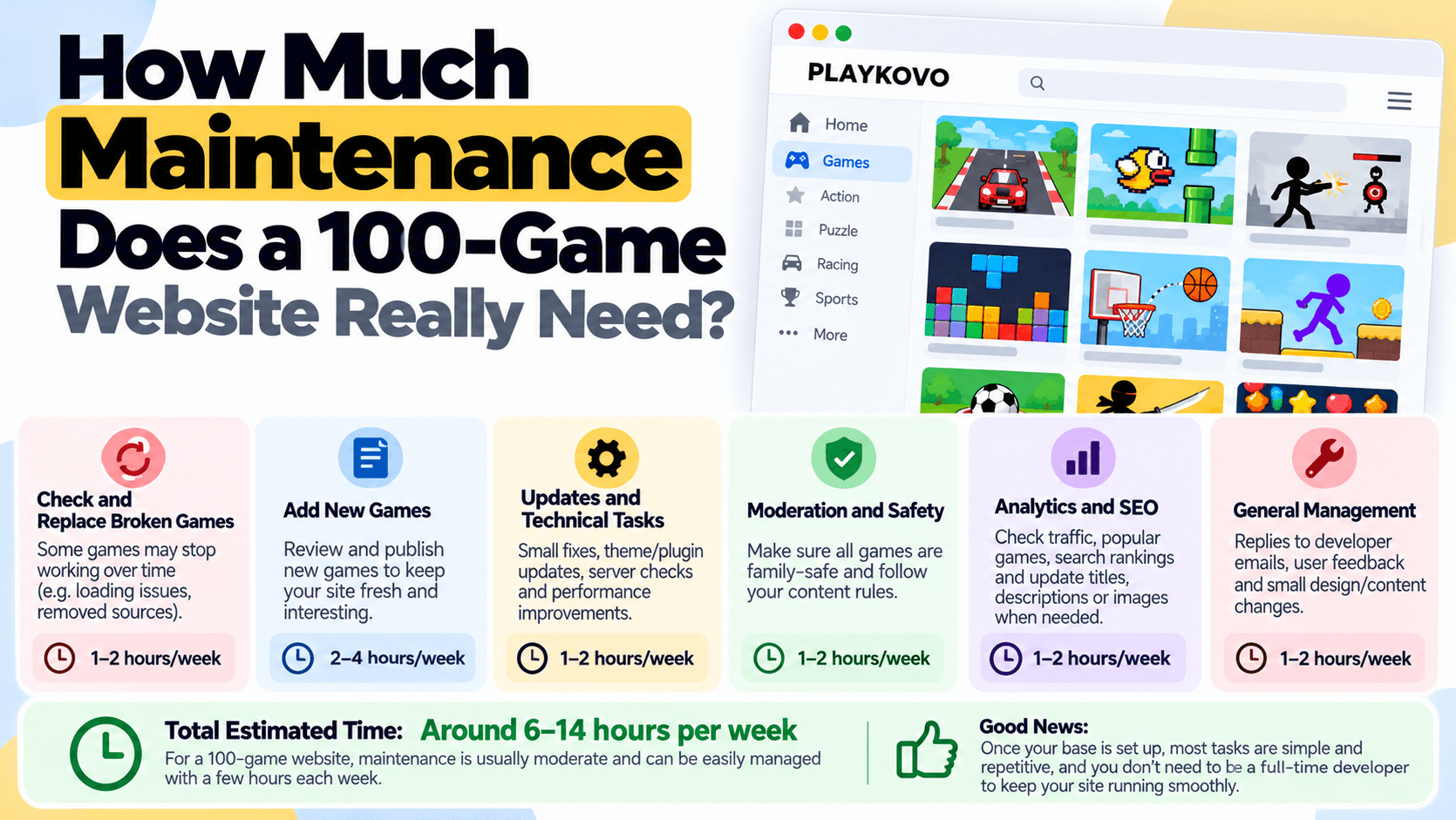
How Much Maintenance Does a 100-Game Website Really Need?
With embedded games, maintenance is mostly watching rather than fixing. Here is a weekly, monthly and quarterly plan for a 100-game site, which parts we measured (an automated check of 92 games takes about a minute), and time estimates that are labeled as estimates.