Wordle Hard Mode Explained: Rules, Examples and Strategies
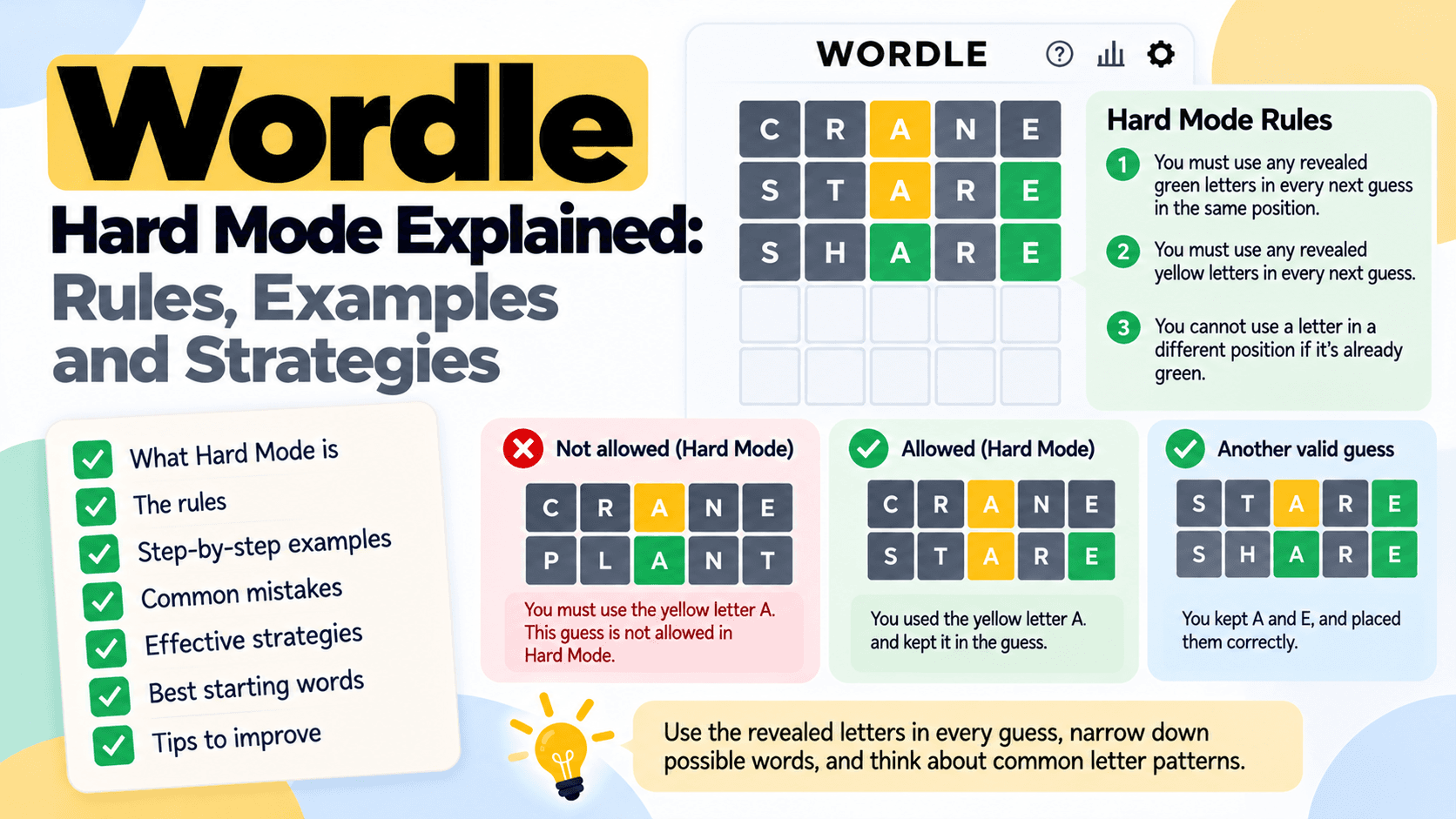
Hard Mode makes one demand: any hint you have revealed must be used in your next guesses. Greens must stay in their spots, and yellow letters must appear somewhere. It does not ban letters you know are wrong. That distinction matters for strategy, so we tested it in the live game instead of repeating what others say.
What we tested. On 16 October 2026 (puzzle #1945, answer SHADY) we played the same opening in normal mode and in Hard Mode in the live NYT Wordle and recorded every message the game showed. The comparisons below are from those runs.
How to turn Hard Mode on
Open Settings (the gear icon) and switch on Hard Mode. The game's description in that menu reads: "Any revealed hints must be used in subsequent guesses." The same screen carries a second line that matters a lot: "Hard mode can only be enabled at the start of a round." In our test, after one normal-mode guess the Hard Mode switch was disabled and could not be turned on. Decide before your first guess.
The rules, from what the game actually did
We guessed STASH first in both modes, against the answer SHADY.
Then we tried guesses that break and keep the hints:
| Second guess | Normal mode | Hard Mode |
|---|---|---|
| BRICK (breaks the green S) | Accepted | Rejected: "1st letter must be S" |
| SEAMY (keeps S and A, drops the yellow H) | Accepted | Rejected: "Guess must contain H" |
| SHALT (keeps everything, reuses the gray T) | Accepted | Accepted |
| SLASH (keeps S and A, puts the yellow H in the same spot again) | Accepted | Accepted |
Four things follow from that table:
- Greens are locked. Moving or dropping a green letter is rejected, and the message names the position.
- Yellows must be included. Leaving out a yellow letter is rejected with "Guess must contain" and the letter.
- Gray letters can be reused. SHALT contains T, which STASH had shown gray, and Hard Mode accepted it. Hard Mode does not stop you from guessing letters you know are absent.
- A yellow letter may repeat in the same spot. SLASH put H in position 5 again, where it had already been yellow, and it was accepted. You are required to include the letter, not to move it.
After a later guess revealed H as green in position 2, a guess with H elsewhere was rejected with "2nd letter must be H". The requirements update with every new hint.
Normal Mode versus Hard Mode
| Normal Mode | Hard Mode | |
|---|---|---|
| Valid guesses | Any word in the game's list | Only words that use every revealed hint |
| Greens | Free to move | Must stay in place |
| Yellows | Free to ignore | Must appear in every later guess |
| Grays | Free to reuse | Free to reuse |
| "Probe" guesses to test new letters | Allowed | Possible only while they also satisfy the hints |
| When it can be switched on | Any time | Only at the start of a round |
| Goal and number of guesses | 6 | 6 |
The answer and the six guesses are the same in both modes. Only the guesses you may type change.
The same puzzle in both modes
In normal mode, after STASH you may use a guess to test new letters:
In Hard Mode the same opening limits you to guesses that keep the hints. This path was accepted by the live game and solved the puzzle in four:
The normal-mode sequence above is not the best normal-mode play. It is an example of how freedom lets you waste guesses as well as save them.
Is Hard Mode harder?
Not in every case. It limits your options, so it removes one tool: guessing a word whose purpose is to test new letters rather than to be the answer. If you depend on that tool, Hard Mode costs you. If you usually guess words that could be the answer anyway, Hard Mode may change very little, and it can even keep you from wasting a guess.
We do not have statistics on how Hard Mode affects average scores, so we make no claim about win rates. What we can say from the tests is that the mode has a real cost in one situation: a long list of similar words.
The trap: families of similar words
Suppose you have learned the pattern _IGHT. In the live game, all of these were accepted as guesses: EIGHT, FIGHT, LIGHT, MIGHT, NIGHT, RIGHT, SIGHT, TIGHT, BIGHT and WIGHT. In normal mode you could use a word that tests several first letters at once. In Hard Mode every guess must keep IGHT in place, so you can only try one first letter per guess. That is where Hard Mode runs out of guesses.
Five strategies that follow from the real rules
1. Choose your mode before the first guess. You cannot turn Hard Mode on once the round has started.
2. Use guess 2 to learn, within the hints. After your opener, pick a second word that keeps your hints but tests letters you have not tried. SHALT above is an example: it kept the hints and tested T and L.
3. Know that gray letters are free. If you need a word with a letter you tried before and it was gray, you may still use it, though it cannot be in the answer.
4. Count families before you commit. When your hints leave a pattern like _IGHT or _ATCH, count how many words fit and how many guesses you have. If the family is bigger than your guesses, you cannot test them all, so reduce your risk earlier, in guesses 2 and 3.
5. Move your yellows unless you have a reason not to. Hard Mode lets you repeat a yellow letter in the same spot, as SLASH showed, but that repeats information you already have. Put it somewhere new.
Which mode is right for you?
- New to Wordle: normal mode is more forgiving. Hard Mode is also a fair way to learn, because it forces you to use information you just paid for.
- Experienced and chasing efficiency: try Hard Mode on easy days and keep normal mode for puzzles with many similar words.
- Playing for streaks: pick the mode that causes you fewer losses, not the one that sounds more serious.
The takeaway
Hard Mode requires revealed hints to be used: greens stay in place, yellows appear in every later guess. It does not stop you from reusing gray letters, and it can only be switched on before your first guess. For related reading, see our rules guide on how many letters Wordle uses and the starting words guide.
Related Posts
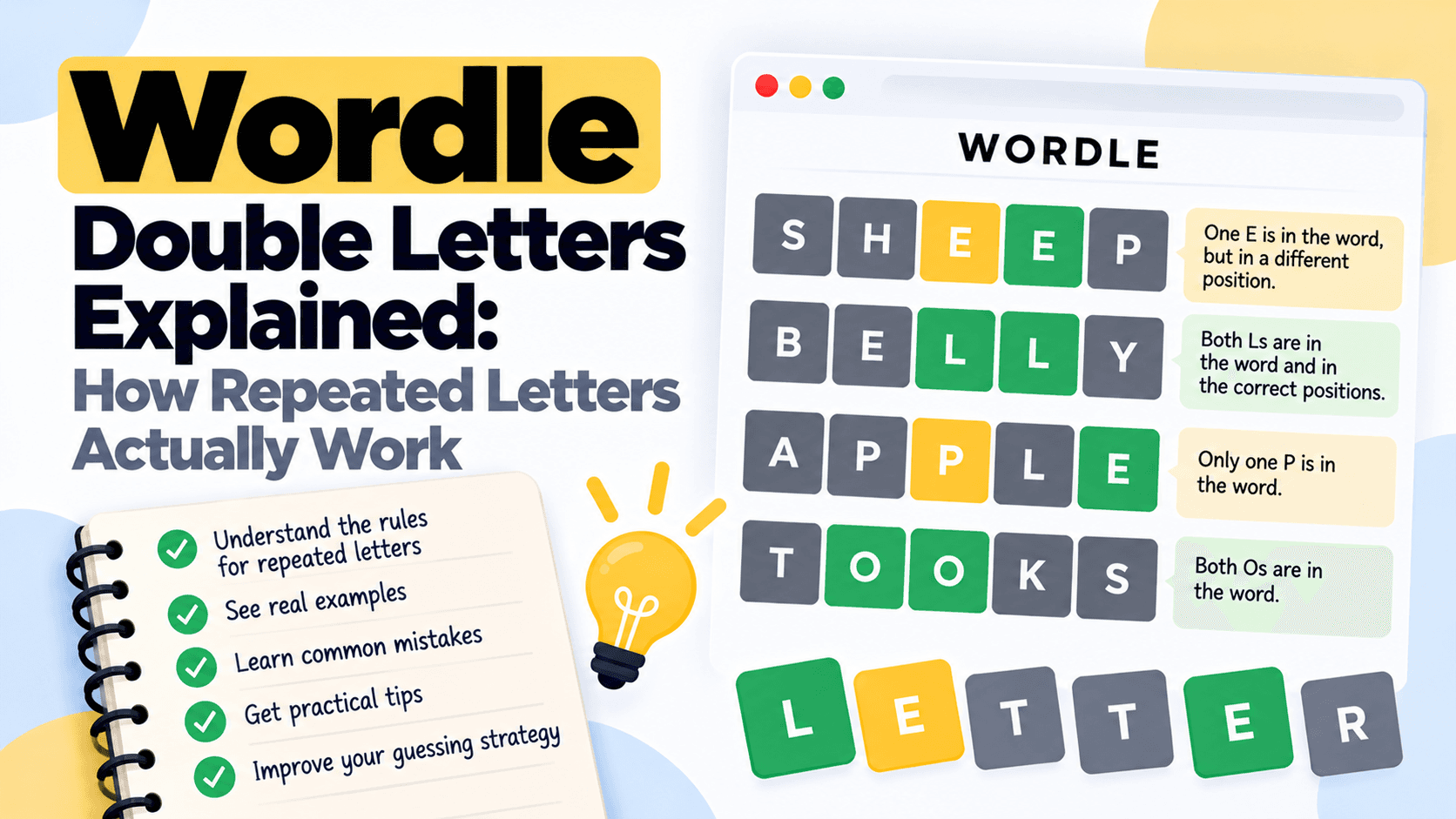
Wordle Double Letters Explained: How Repeated Letters Actually Work
When a letter appears twice in your guess, Wordle colors it by counting copies, not by asking "is it in the word?". Here is the exact rule, tested against the live game, with real boards, a color table and an interactive practice tool.
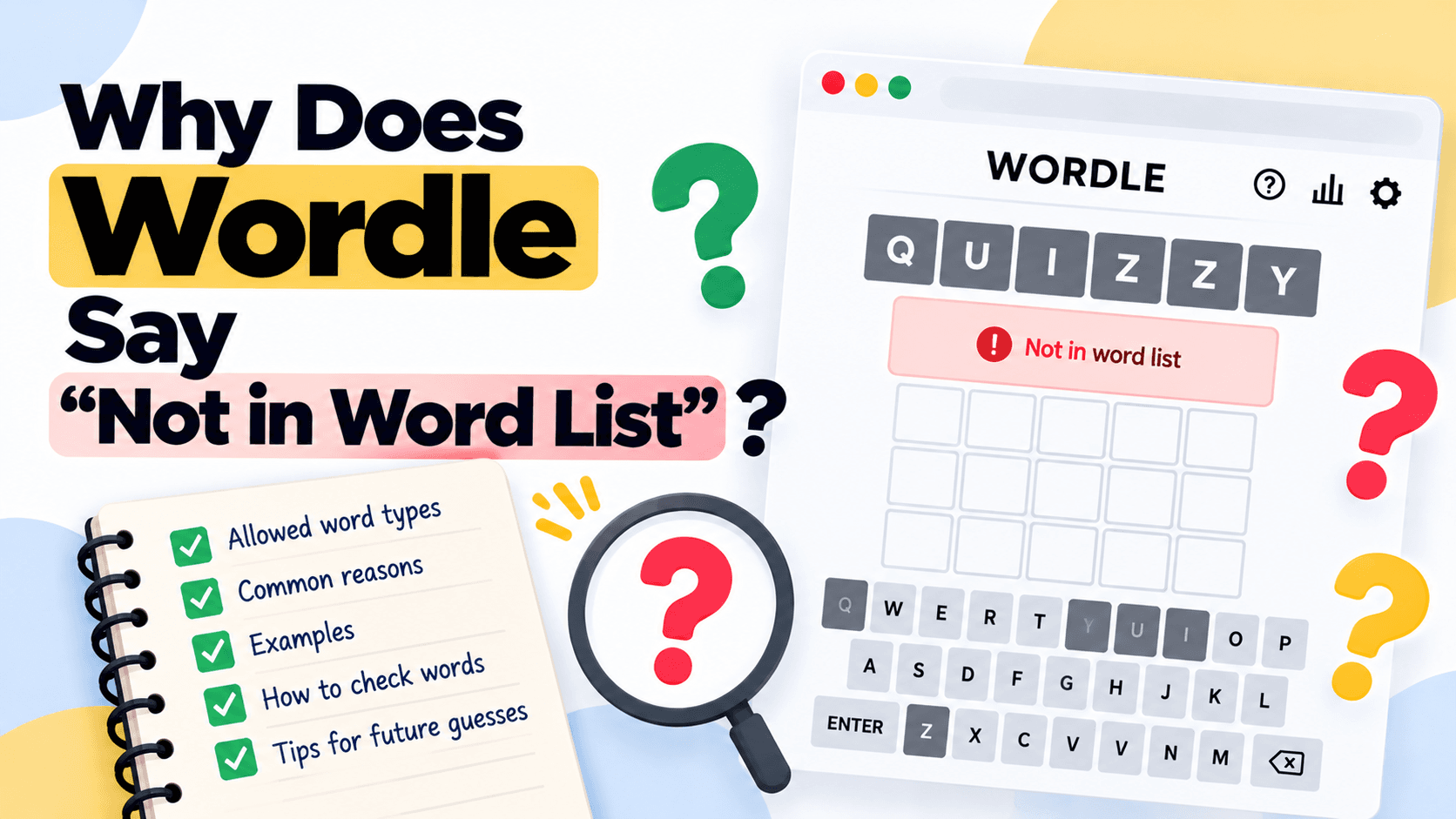
Why Does Wordle Say "Not in Word List"?
Wordle rejects any five-letter combination that is not in its list of accepted guesses, which is not the same as the dictionary. We typed 55 words into the live game, listed what it accepted and rejected, and give five fixes for the message.
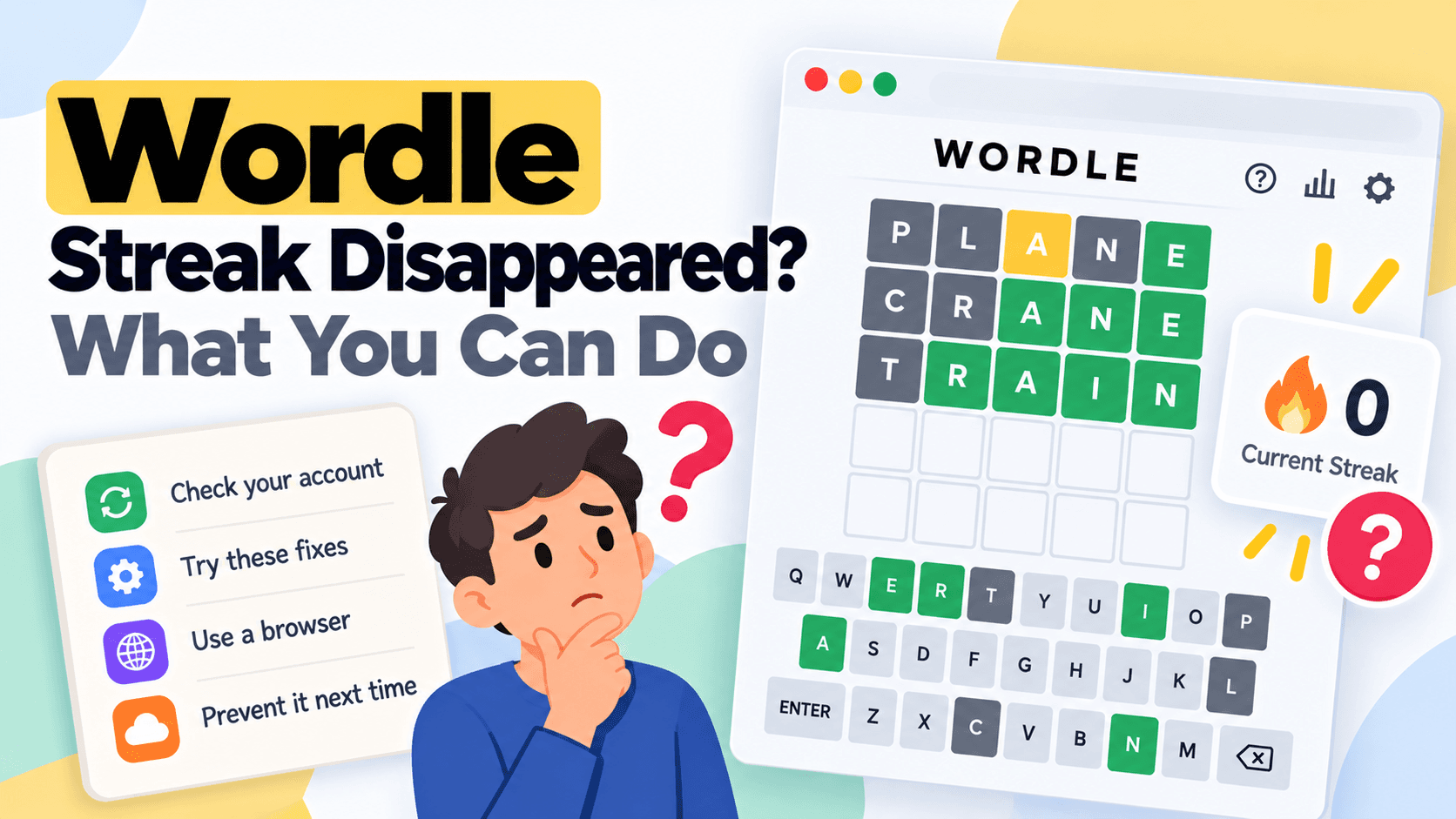
Wordle Streak Disappeared? What You Can Do
A Wordle streak is stored in your browser unless you are logged in to an NYT account. We tested what happens to a signed-out player's stats when the page reloads, when site data is cleared and in a fresh browser, and list fixes by symptom, with honest limits on what can be recovered.