Wordle Double Letters Explained: How Repeated Letters Actually Work
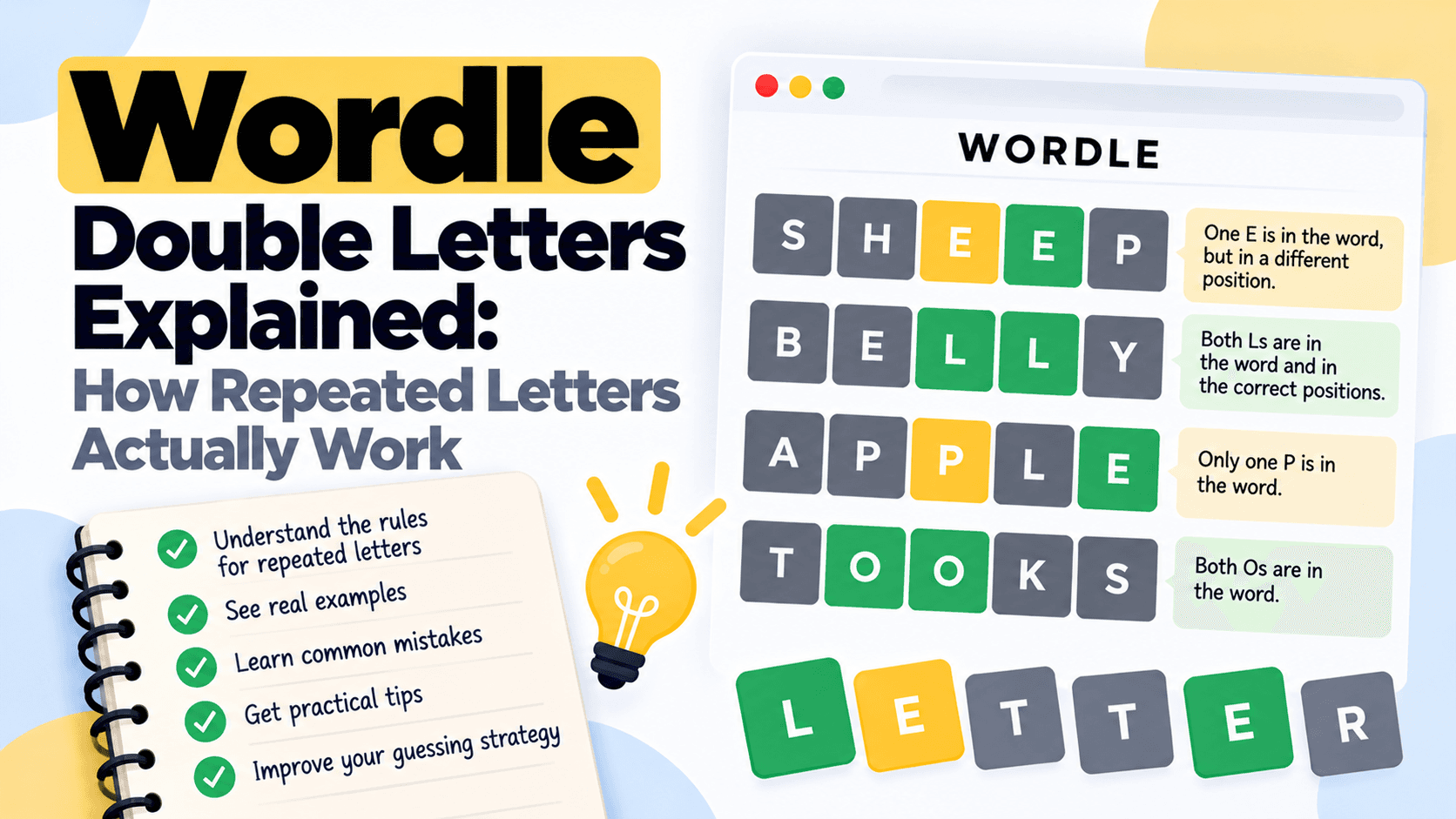
Wordle colors repeated letters by counting. A letter can only turn green or yellow as many times as it appears in the answer, and any extra copies in your guess turn gray. That is why you can see one S green, another S gray, and still be sure S is in the word. This guide shows the exact rule, proves it on real boards and teaches you what to do with the information.
What we checked. Wordle's own How To Play screen explains only the three colors. It says nothing about repeated letters, so we tested it. On 16 October 2026 (puzzle #1945) we played 21 guesses in the live NYT game and compared every row with a small scoring program. All 21 rows matched. The boards in the first section come from those real games. Boards for answers with repeated letters were computed with the same program, and we label them as computed, because we could not test them live on a day when the answer had a repeated letter.
The rule in two steps
Wordle appears to score each guess in two passes:
- Greens first. Every letter in the right position is green, and it uses up one copy of that letter from the answer.
- Then yellows, left to right. A remaining letter is yellow only if the answer still has an unused copy of it. Otherwise it is gray, even if the letter is in the word.
The game's own description gives the three meanings: a green letter is in the word and in the correct spot, a yellow letter is in the word but in the wrong spot, and a gray letter is not in the word in any spot. The repeated-letter behavior is the fine print on that last one: "not in the word" really means "no copy left for this tile".
Four real boards from the live game
The answer that day was SHADY, which has one S, one A, one D, one H and one Y, with no repeated letters. That makes it a clean test of what happens when your guess repeats a letter the answer has only once.
SASSY: three S tiles, one counted
DADDY: green beats an earlier yellow
KAYAK: two A tiles, one counted
ASHES: the leftmost copy gets the yellow
What happens when the answer has two copies
Now the interesting case. If the answer itself contains a repeated letter, both copies can be colored. These boards are computed with the scoring rule, not played live.
One more computed example with a letter that appears twice in both words:
A table you can keep
| In your guess | In the answer | What the tiles show |
|---|---|---|
| A letter once | Once, same spot | Green |
| A letter once | Once, other spot | Yellow |
| A letter twice | Once, one of your two in the right spot | One green, the other gray |
| A letter twice | Once, neither in the right spot | The left tile yellow, the right tile gray |
| A letter twice | Twice, neither in the right spot | Both yellow |
| A letter twice | Twice, one in the right spot | One green, one yellow |
| A letter three times | Twice | Two colored, one gray |
| A letter | Not in the answer | Gray everywhere |
Try it yourself
Type your own answer and guess. The tool applies the two-pass rule and tells you why each tile got its color.
Try it yourself
Type any five-letter answer and guess. This is a practice tool with your own made-up answer, not today's puzzle.
- B (yellow): Pass 2: B is in the answer and a copy is still unused, so it is yellow.
- O (gray): O is not in the answer, so it is gray.
- B (green): Pass 1: B is the answer's letter 3, so it is green and uses up a copy of B.
- B (gray): Pass 2: every copy of B in the answer is already accounted for, so this one is gray.
- Y (green): Pass 1: Y is the answer's letter 5, so it is green and uses up a copy of Y.
What a gray tile does and does not tell you
This is the practical value of the rule. When a letter appears more than once in your guess, compare its colors:
| What you see | What it means for the answer |
|---|---|
| One copy colored, another gray | The answer has exactly as many copies as were colored |
| All copies colored | The answer has at least that many copies |
| All copies gray | The letter is not in the answer |
So in the SASSY board, one S green and two S gray tells you the answer has exactly one S. In the computed ERASE board, two yellow E tiles tell you SPEED has at least two Es (and the board of GEESE, with one gray E left over, shows there are exactly two).
Three common mistakes
1. Treating a gray repeat as "the letter is not in the word". In SASSY, S is gray twice, yet S is in the answer. Always look at whether another copy of the same letter in that guess was colored.
2. Expecting an earlier tile to win. In DADDY the first D comes first but the later D gets the color, because green is decided before yellow. The yellow only goes left to right among the leftover tiles.
3. Reading yellow as "this exact tile's letter belongs elsewhere". A yellow tile tells you the letter is in the word, but not which of your repeated tiles matched it. When you repeat a letter, the position of the yellow tile is partly an artifact of scoring.
How to choose your next guess when doubles are possible
- Count the evidence. Write down, for each letter, whether you know exactly one copy, at least two, or none.
- Use the exact rule. A guess with a deliberate double (for example, two E tiles) is most useful when you suspect two copies. If you think there is one, a double wastes a tile.
- Place greens before testing. Keep known greens in place so the repeated letter's other copy gets tested in a new spot.
- Watch the end. With one or two guesses left, avoid guessing a double you are unsure of unless it is your best candidate.
For opening-word ideas, see our guide to Wordle starting words.
The takeaway
Count copies. A tile is colored only while the answer still has an unused copy of that letter, and greens are counted first. If you remember only one thing, remember that a gray tile means "no copy left for this tile", not necessarily "not in the word".
Related Posts
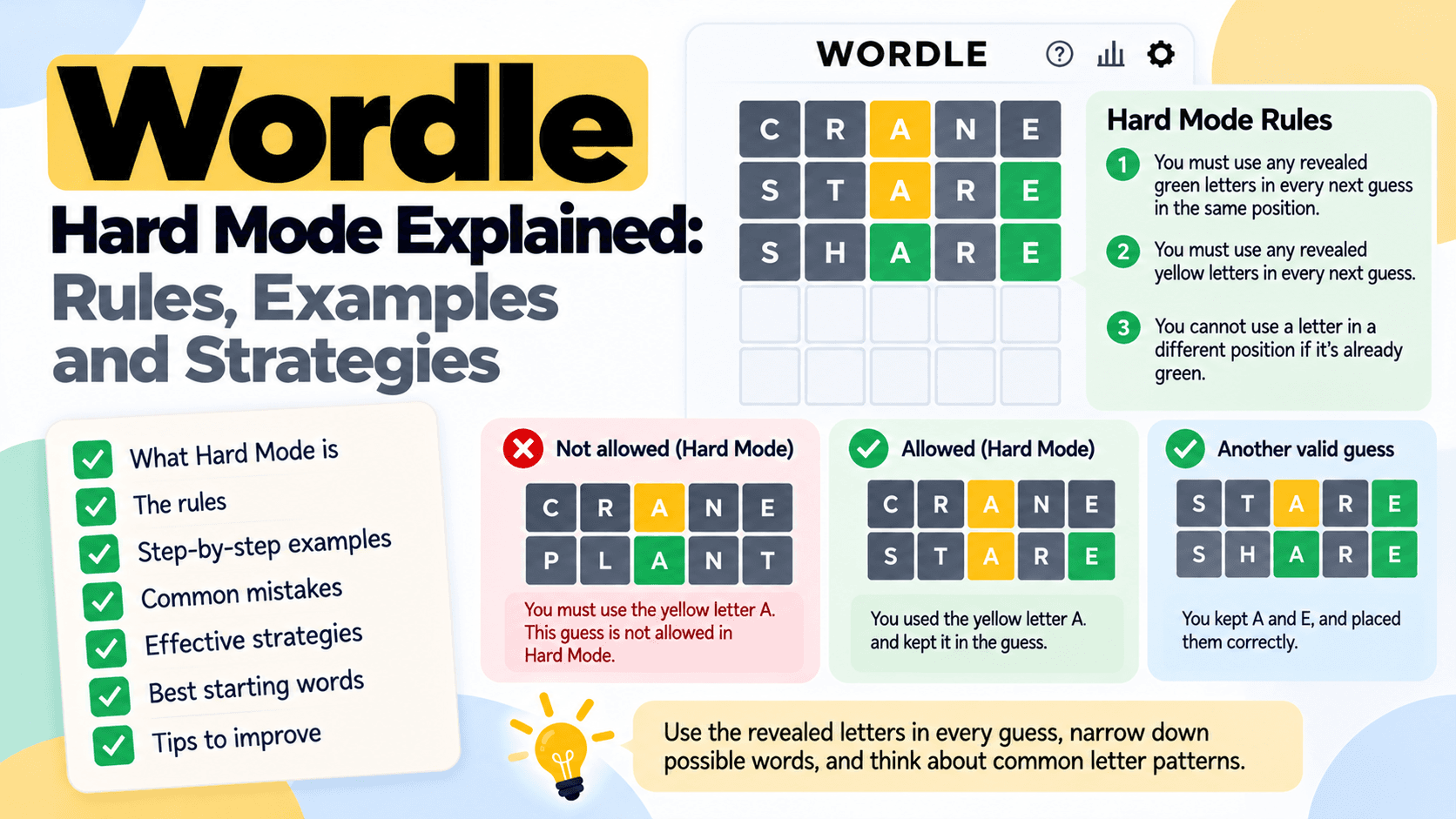
Wordle Hard Mode Explained: Rules, Examples and Strategies
Hard Mode requires you to use every revealed hint in later guesses, and nothing more. We tested exactly what it accepts and rejects in the live game, solved the same puzzle in both modes and give five strategies that follow from the real rules.
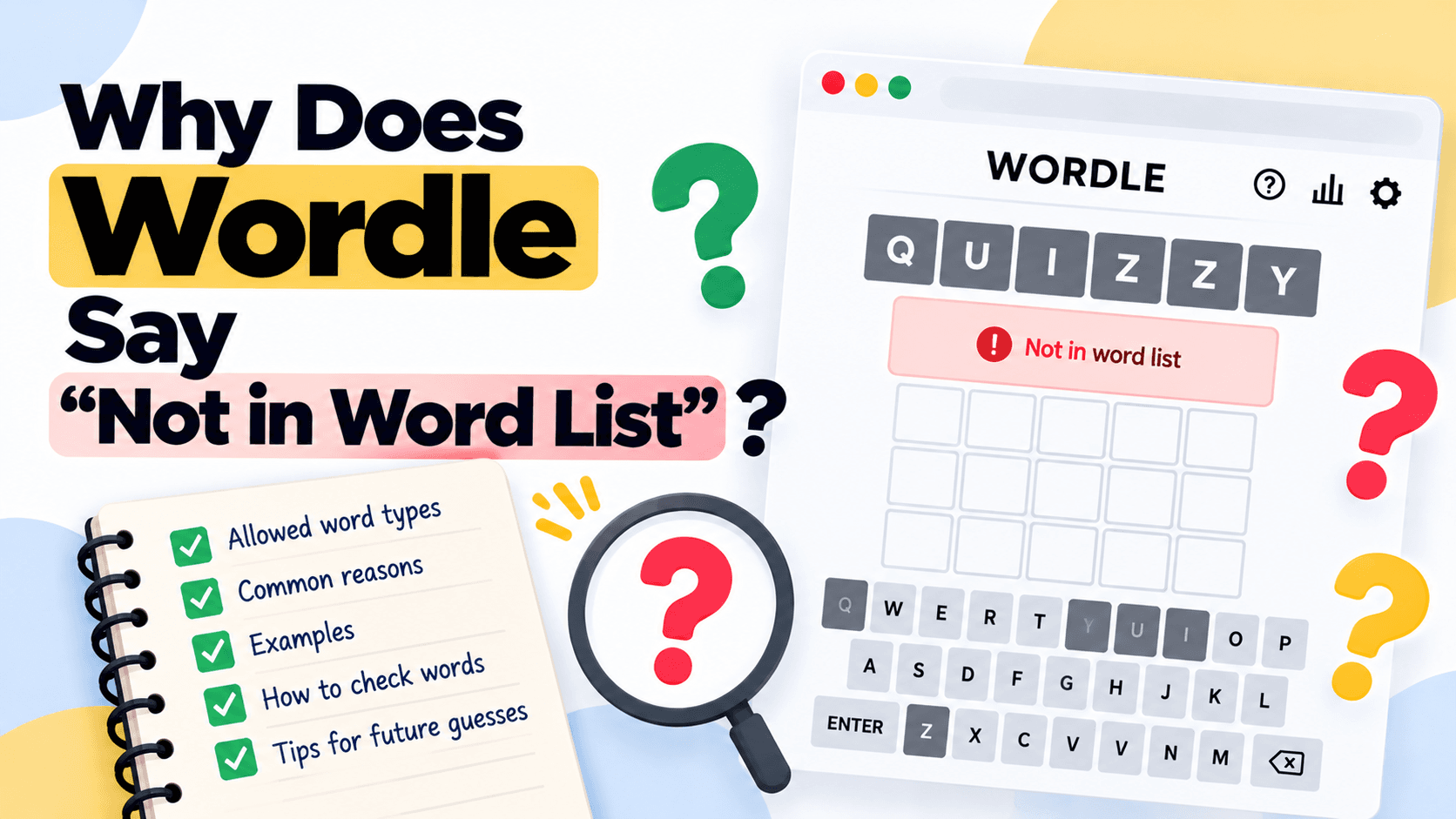
Why Does Wordle Say "Not in Word List"?
Wordle rejects any five-letter combination that is not in its list of accepted guesses, which is not the same as the dictionary. We typed 55 words into the live game, listed what it accepted and rejected, and give five fixes for the message.
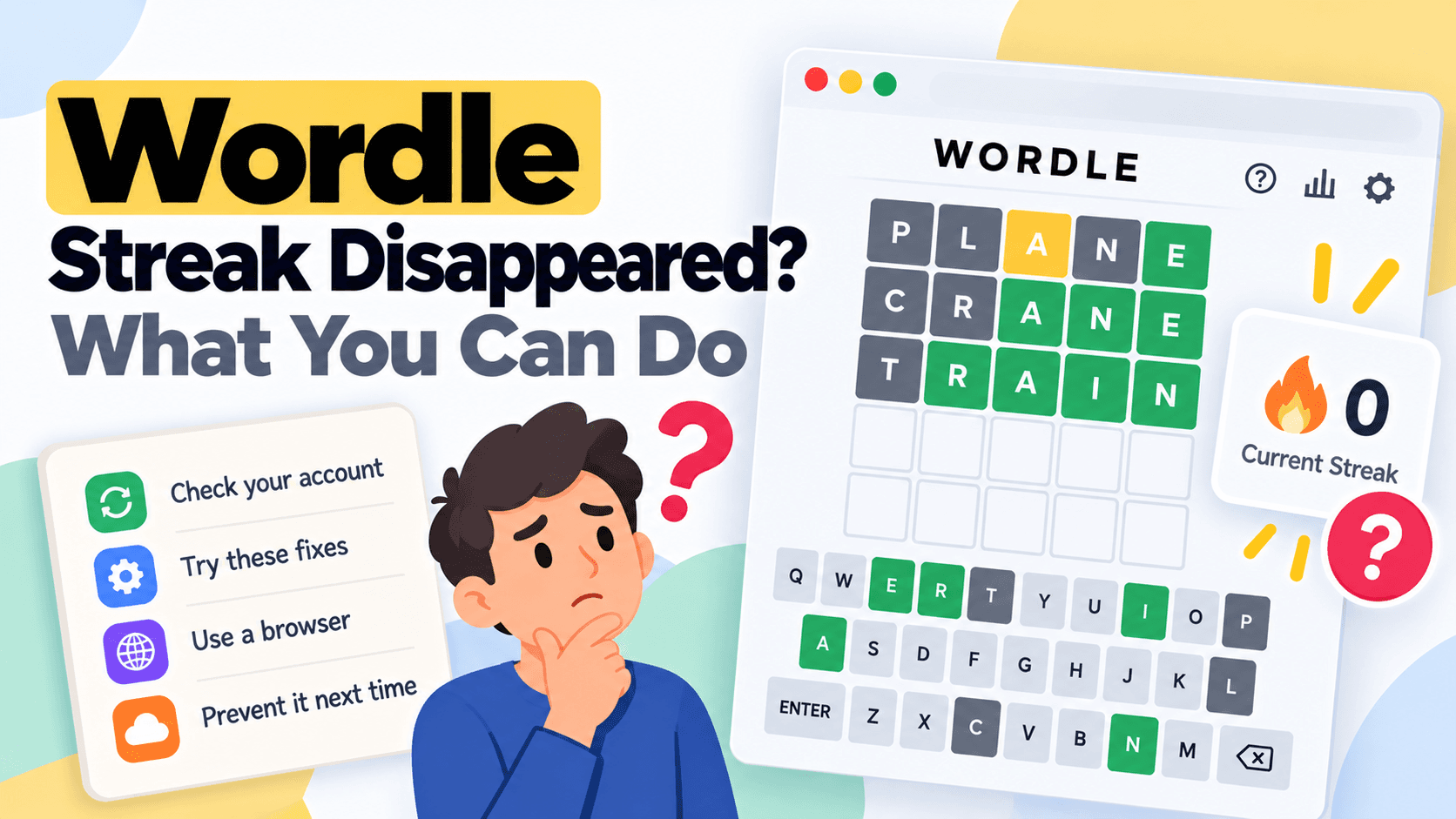
Wordle Streak Disappeared? What You Can Do
A Wordle streak is stored in your browser unless you are logged in to an NYT account. We tested what happens to a signed-out player's stats when the page reloads, when site data is cleared and in a fresh browser, and list fixes by symptom, with honest limits on what can be recovered.